[ivory-search id="3327" title="AJAX Search Form"]

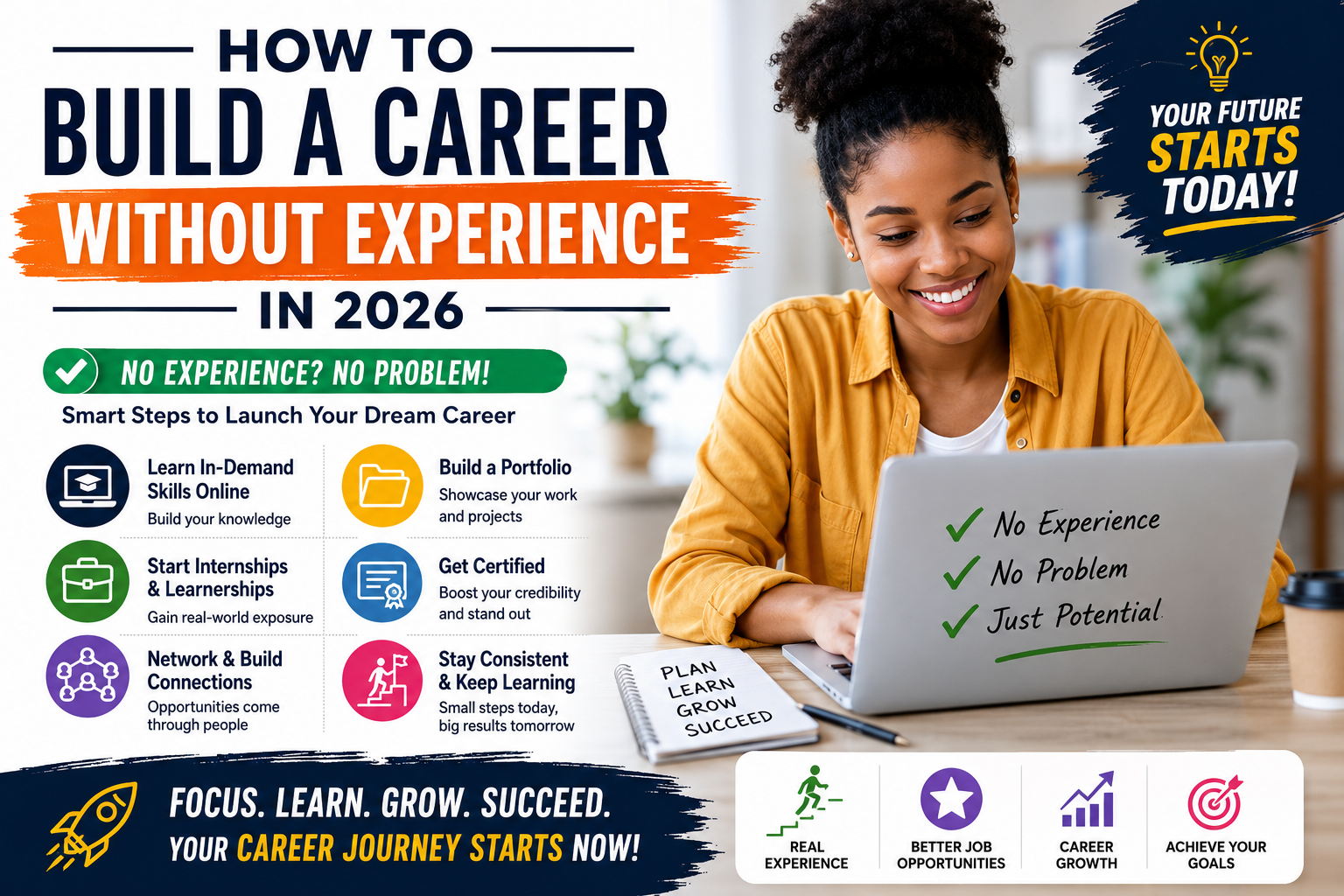
How To Build a Career Without Experience
How to Build a Career Without Experience in 2026
How To Build a Career Without Experience in 2026
One of the most frustrating challenges facing young professionals today is trying to build a career without experience. Employers often ask for experience, yet many job seekers struggle to gain that experience because they cannot get hired in the first place.
If you have ever wondered how to build a career without experience, you are not alone.
Millions of graduates, school leavers, career changers, and first-time job seekers face the same challenge every year. The good news is that experience is not the only factor employers consider. Skills, attitude, potential, certifications, networking, and practical projects can all help you secure opportunities.
In this guide, you’ll learn exactly how to build a career without experience using proven strategies that work in 2026 and beyond.
Why Experience Isn’t Everything
How To Build a Career Without Experience in 2026
The job market has changed dramatically over the past decade.
Many employers now focus on skills-based hiring rather than solely looking at years of experience.
According to research from the World Economic Forum, employers increasingly prioritize practical skills, adaptability, and problem-solving abilities over traditional credentials alone.
This shift creates opportunities for individuals who may not have formal work experience but can demonstrate value in other ways.
Understanding What Employers Actually Want
How To Build a Career Without Experience in 2026
Before applying for jobs, it’s important to understand what hiring managers seek.
Most employers look for:
- Communication skills
- Problem-solving abilities
- Reliability
- Teamwork
- Technical competence
- Willingness to learn
- Positive attitude
Many of these qualities can be demonstrated without formal employment history.
17 Proven Ways to Build a Career Without Experience
How To Build a Career Without Experience in 2026
1. Start with Internships
Internships remain one of the most effective ways to gain workplace exposure.
Benefits include:
- Real-world experience
- Professional networking
- Skill development
- Improved CV
Many companies offer paid and unpaid internship programmes for students and graduates.
2. Apply for Learnerships and Apprenticeships
How To Build a Career Without Experience in 2026
Learnerships and apprenticeships combine training with workplace experience.
Advantages include:
- Monthly stipends
- Industry-recognized qualifications
- Practical learning
- Increased employability
These programmes are particularly valuable for individuals entering technical or vocational careers.
3. Volunteer Your Skills
How To Build a Career Without Experience in 2026
Volunteering provides practical experience while contributing to meaningful causes.
You can volunteer for:
- Non-profit organizations
- Community projects
- Local charities
- Educational institutions
Employers often value volunteer experience because it demonstrates initiative and commitment.
4. Build an Online Portfolio
How To Build a Career Without Experience in 2026
A portfolio allows employers to see your abilities.
Examples include:
- Writing samples
- Design projects
- Coding projects
- Marketing campaigns
- Case studies
A strong portfolio can sometimes outweigh a lack of experience.
5. Complete Online Certifications
Certifications help prove your skills.
Popular certification providers include:
- Google Career Certificates
- Microsoft Learn
- Coursera
- LinkedIn Learning
- IBM SkillsBuild
Certifications are particularly valuable in technology, business, and digital marketing fields.
6. Develop In-Demand Skills
Focus on skills employers are actively seeking.
Examples include:
Technical Skills
- Data Analysis
- Artificial Intelligence
- Cybersecurity
- Programming
- Cloud Computing
Soft Skills
- Communication
- Leadership
- Time Management
- Teamwork
7. Create Personal Projects
Projects demonstrate practical capability.
Examples include:
- Building a website
- Launching a blog
- Developing an app
- Managing social media accounts
- Conducting research projects
Projects show employers that you can apply knowledge effectively.
8. Network Strategically
Networking remains one of the fastest ways to discover opportunities.
Ways to network include:
- Industry events
- Professional associations
- Alumni groups
- Online communities
Many jobs are filled through referrals before they are publicly advertised.
9. Optimize Your LinkedIn Profile
LinkedIn acts as your digital resume.
Ensure your profile includes:
- Professional photo
- Strong headline
- Skills section
- Certifications
- Portfolio links
Recruiters frequently use LinkedIn to identify potential candidates.
10. Start Freelancing
Freelancing allows you to gain experience while earning income.
Popular freelance services include:
- Content writing
- Graphic design
- Web development
- Virtual assistance
- Digital marketing
Even small freelance projects can strengthen your resume.
11. Attend Industry Events
Industry events expose you to professionals and opportunities.
Consider attending:
- Career fairs
- Conferences
- Workshops
- Networking events
- Webinars
These events often provide direct access to recruiters and employers.
12. Tailor Every Job Application
Avoid sending the same CV everywhere.
Customize:
- Your resume
- Cover letter
- Skills section
- Keywords
Tailored applications significantly improve response rates.
13. Gain Experience Through Part-Time Work
Part-time jobs provide transferable skills.
Examples include:
- Customer service
- Retail
- Hospitality
- Administration
Employers value these experiences even if they are unrelated to your target career.
14. Build a Personal Brand
Your online presence matters.
Ways to build your brand include:
- Writing articles
- Sharing insights on LinkedIn
- Creating educational content
- Participating in industry discussions
A strong personal brand can attract opportunities.
15. Find a Mentor
Mentors provide guidance and career advice.
Benefits include:
- Industry insights
- Professional connections
- Skill development
- Career planning
Many successful professionals credit mentors for accelerating their careers.
16. Practice Interview Skills
Interviews are often where inexperienced candidates lose opportunities.
Prepare by:
- Researching companies
- Practicing common questions
- Developing confidence
- Learning storytelling techniques
Strong interview performance can overcome limited experience.
17. Never Stop Learning
Continuous learning is essential in today’s workforce.
Stay updated through:
- Online courses
- Industry publications
- Podcasts
- Professional certifications
Learning demonstrates ambition and adaptability.
Best Careers to Start Without Experience in 2026
Several industries actively hire entry-level candidates.
Technology
- IT Support
- Junior Developer
- Data Analyst
Sales
- Sales Representative
- Customer Success Associate
Digital Marketing
- Social Media Coordinator
- Content Creator
Customer Service
- Call Centre Agent
- Customer Support Specialist
Healthcare Support
- Healthcare Administrator
- Medical Receptionist
Logistics
- Warehouse Assistant
- Supply Chain Coordinator
Common Mistakes to Avoid
Many job seekers make avoidable mistakes.
Waiting for the Perfect Job
Apply even if you don’t meet every requirement.
Ignoring Networking
Networking often leads to opportunities unavailable through job boards.
Underestimating Transferable Skills
Skills gained from school, volunteering, or part-time work can be highly valuable.
Not Following Up
Professional follow-ups demonstrate interest and persistence.
How Long Does It Take to Build a Career?
Building a successful career takes time.
Typical timeline:
First 3 Months
- Learning skills
- Improving CV
- Applying for opportunities
6–12 Months
- Gaining experience
- Expanding network
- Building confidence
1–3 Years
- Career progression
- Increased earnings
- Professional specialization
Consistency is often more important than speed.
Frequently Asked Questions
Can I get a job with no experience?
Yes. Many employers hire candidates based on skills, attitude, and potential rather than experience alone.
How do I gain experience if nobody hires me?
Internships, volunteering, freelancing, certifications, and personal projects can help build experience.
Which industries hire people without experience?
Technology, retail, customer service, logistics, sales, healthcare support, and digital marketing often offer entry-level opportunities.
Are online certifications worth it?
Yes. Certifications from reputable providers can strengthen your resume and demonstrate commitment to learning.
How important is networking?
Networking is extremely important. Many job opportunities are discovered through professional connections.
Can freelancing count as experience?
Absolutely. Freelance projects demonstrate practical skills and real-world application.
Final Thoughts
Learning how to build a career without experience is one of the most valuable investments you can make in your future. While the process may feel challenging at first, thousands of professionals successfully start their careers every year without prior work experience.
Focus on developing skills, building a portfolio, networking strategically, earning certifications, and seeking practical opportunities through internships, volunteering, and freelancing.
Remember: employers hire potential as much as experience. By consistently improving yourself and taking action, you can build a rewarding and successful career regardless of where you start.
The most important step is to begin today.