[ivory-search id="3327" title="AJAX Search Form"]

12 Jobs in Port Elizabeth in 2026 – Skills That Can Get You Hired
If you are looking for jobs in Port Elizabeth in 2026, you are not alone. Many young people across Port Elizabeth—also officially called Gqeberha—are searching for stable employment or training opportunities that can help them build long-term careers.
The good news is that several industries in the Eastern Cape are expected to continue hiring in 2026. Manufacturing, engineering, logistics, construction, and renewable energy sectors are expanding, which means skilled workers will be needed.
Training authorities like the Manufacturing, Engineering and Related Services Sector Education and Training Authority are supporting these industries by offering skills development programmes. Through the official MRSETA platform at mrseta.co.za, young people can access information about apprenticeships, technical training, and learnership opportunities designed to prepare them for real jobs.
If you are between 18 and 35, unemployed, or planning a new career path, understanding which jobs are actually in demand can help you avoid wasting time applying for positions with little opportunity. This guide explains the most promising jobs in Port Elizabeth in 2026, the skills employers want, and how you can prepare yourself to enter these growing industries.
Programme Summary
12 Jobs in Port Elizabeth in 2026
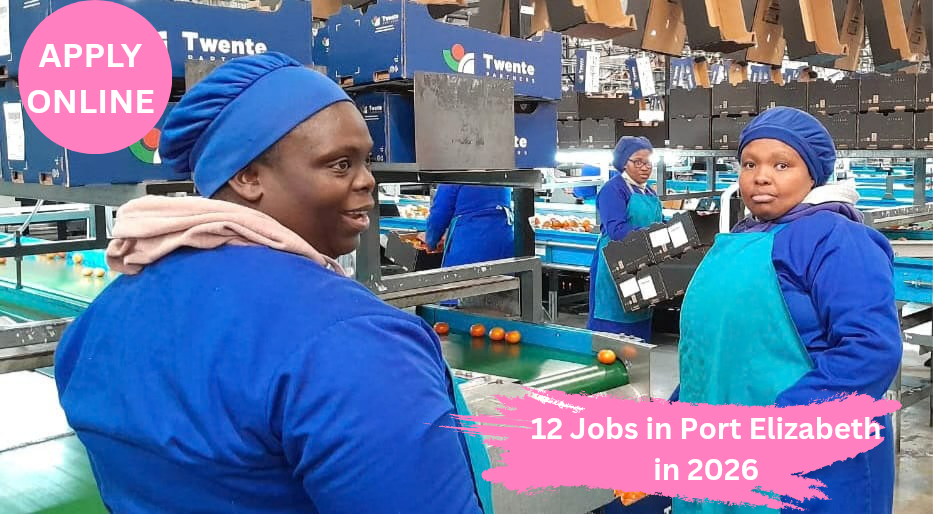
Employment Opportunities Guide – Port Elizabeth 2026
- Programme Focus: Jobs and Skills Development
- Location: Port Elizabeth / Gqeberha, Eastern Cape
- Industries Hiring: Manufacturing, Automotive, Logistics, Engineering
- Training Platform: mrseta.co.za
- Target Applicants: Youth aged 18–35 and job seekers
- Requirements: Grade 10, Grade 11, or Matric depending on programme
- Application Method: Online through training or employer platforms
Understanding these industries can help you choose training programmes that lead to real employment opportunities.
About Employment Opportunities in Port Elizabeth
12 Jobs in Port Elizabeth in 2026
Port Elizabeth has long been one of South Africa’s most important industrial cities. The region hosts several manufacturing plants, automotive factories, and logistics hubs.
Because of this strong industrial base, companies in the area often require skilled workers such as technicians, engineers, electricians, machine operators, and welders.
Skills development organisations like MRSETA work with industries to address skills shortages and support workforce training. Their official website mrseta.co.za provides information about:
- Industry skills demand
- Apprenticeship programmes
- Learnership opportunities
- Technical training initiatives
Additional information about national skills development initiatives can also be found on the website of the Department of Higher Education and Training and the official South African Government portal.
By focusing on sectors with real demand, job seekers can significantly improve their employment prospects.
12 Jobs in Port Elizabeth in 2026
Below are some of the careers expected to remain in demand in the region.
1. Automotive Technicians
Port Elizabeth is widely known for its automotive manufacturing sector. Automotive technicians play a key role in maintaining vehicles and production equipment used in manufacturing plants.
Typical responsibilities include diagnosing mechanical issues, repairing engines, and maintaining vehicle systems.
Many technicians begin their careers through apprenticeships or vocational training programmes.
2. Electricians
Electricians are essential for infrastructure development, factory maintenance, and construction projects.
Their duties include installing electrical wiring, repairing systems, and ensuring equipment operates safely.
Because electricity powers almost every industry, this trade skill remains one of the most reliable career paths.
3. Welders
Welding is a highly valued skill in engineering, construction, and manufacturing industries.
Welders join metal structures, repair machinery, and fabricate industrial equipment.
With proper training and certification, experienced welders can find opportunities in many sectors.
4. Machine Operators
Manufacturing plants rely heavily on machine operators to run production lines.
These workers monitor equipment, adjust machines during production, and ensure products meet quality standards.
Training programmes often teach the technical skills required for this role.
5. Industrial Technicians
Industrial technicians help keep factories running efficiently by maintaining machines and troubleshooting technical issues.
Their work is essential in large manufacturing environments.
Technical training programmes can prepare candidates for these roles.
6. Construction Workers
Infrastructure and housing projects continue to create demand for construction workers.
Jobs may include bricklaying, carpentry, plumbing, and site supervision.
These roles are often accessible to entry-level workers who complete trade training.
7. Logistics Coordinators
With the growth of distribution centres and supply chains, logistics professionals are increasingly needed.
Responsibilities include managing shipments, coordinating deliveries, and tracking inventory.
These roles require organisational and communication skills.
8. Warehouse Operators
Warehouse operators handle goods in storage facilities and distribution centres.
Their duties may include packing products, managing inventory, and operating forklifts.
Entry-level training can help workers secure these roles.
9. Solar Energy Technicians
Renewable energy is growing rapidly in South Africa. Solar technicians install and maintain solar energy systems.
As the country invests more in clean energy, demand for these technicians is expected to increase.
10. Mechanical Engineers
Mechanical engineers design, develop, and maintain mechanical systems used in industries.
This career requires higher education but offers strong earning potential and long-term stability.
11. Safety Officers
Workplace safety is a major priority in factories and construction sites.
Safety officers ensure that companies follow regulations and maintain safe working environments.
Training programmes can prepare candidates for this role.
12. Maintenance Technicians
Maintenance technicians repair and maintain equipment used in factories and buildings.
Their work prevents costly breakdowns and keeps operations running smoothly.
Who Can Apply for These Opportunities
Employment and training opportunities in Port Elizabeth are usually open to:
- Unemployed youth
- School leavers
- TVET college graduates
- Individuals seeking technical careers
- Applicants aged 18–35
Many programmes focus on helping young people gain workplace experience and practical skills.
Requirements
Basic requirements for most programmes include:
- South African ID
- Grade 10, Grade 11, or Matric
- Interest in technical or industrial work
- Ability to complete workplace training
Certain engineering programmes may require Mathematics and Physical Science.
Required Documents
Applicants should prepare the following documents before applying:
- Updated CV
- Certified copy of ID
- Certified qualifications
- Proof of residence (if required)
Having these documents ready can help you apply quickly when opportunities become available.
How to Apply (Step-by-Step)
Follow these steps to start applying for training or employment opportunities.
Step 1 – Visit the Official Website
Go to mrseta.co.za/LINKINN.CO.ZA
Step 2 – Check Available Programmes
Look for training programmes related to manufacturing, engineering, or technical trades.
Step 3 – Prepare Application Documents
Ensure your CV and certificates are ready.
Step 4 – Submit Your Application
Follow the application instructions provided on the website.
Common Mistakes to Avoid
Many job seekers miss opportunities because of simple errors.
Applying Without Research
Understanding industry demand improves your chances.
Submitting Incomplete Applications
Always check that all documents are included.
Ignoring Skills Development
Training significantly increases employability.
Using an Unprofessional CV
Your CV should be clear, updated, and easy to read.
Tips to Increase Your Chances of Getting a Job
Focus on Technical Skills
Trades such as electrical work, welding, and machine operation are in high demand.
Complete Accredited Training
Training supported by MRSETA improves credibility.
Apply for Multiple Opportunities
Submitting several applications increases your chances.
Gain Practical Experience
Workplace training is highly valued by employers.
What Happens After You Apply
After submitting your application, the process may include:
- Application review
- Shortlisting of candidates
- Interviews or assessments
- Final selection
- Placement into training or employment
This process can take several weeks depending on the organisation.
Frequently Asked Questions
Are these jobs guaranteed after training?
Training improves your chances of employment but does not guarantee a job.
Are training programmes free?
Most government-supported programmes are free for eligible applicants.
Can I apply without Matric?
Some programmes accept applicants with Grade 10 or Grade 11.
Where can I find verified opportunities?
You can check official platforms such as mrseta.co.za, gov.za, and dhet.gov.za.
Which industries are growing in Port Elizabeth?
Manufacturing, logistics, renewable energy, and engineering sectors are among the fastest-growing industries.
Final Advice for Job Seekers
Finding a job can be challenging, especially for young people entering the workforce for the first time. However, focusing on industries that are actively hiring can significantly improve your chances.
Technical skills in manufacturing, engineering, logistics, and renewable energy are expected to remain valuable in Port Elizabeth in the coming years. By exploring training programmes through mrseta.co.za and preparing your application documents early, you can position yourself for better opportunities in 2026 and beyond.
Written by Kolobe Murwa
Opportunities Researcher at MRSETA.CO.ZA
Updated March 2026
Kolobe Murwa researches employment trends, learnerships, and skills development opportunities to help young South Africans access reliable career information and training programmes.